


“Nurse, I will die,” I yelled in exasperation. The bright lights overhead combined with the most physical pain in my entire life had me dizzy. “Give me something, anything! I don’t care anymore, I changed my mind!” I was begging for an epidural, in active labor with my first child.
“Sweetie,” the nurse chuckled, “it’s too late, the baby is coming whether you like it or not, and you aren’t dying.”
WHAT MAKES YOU FEEL AT PEACE?
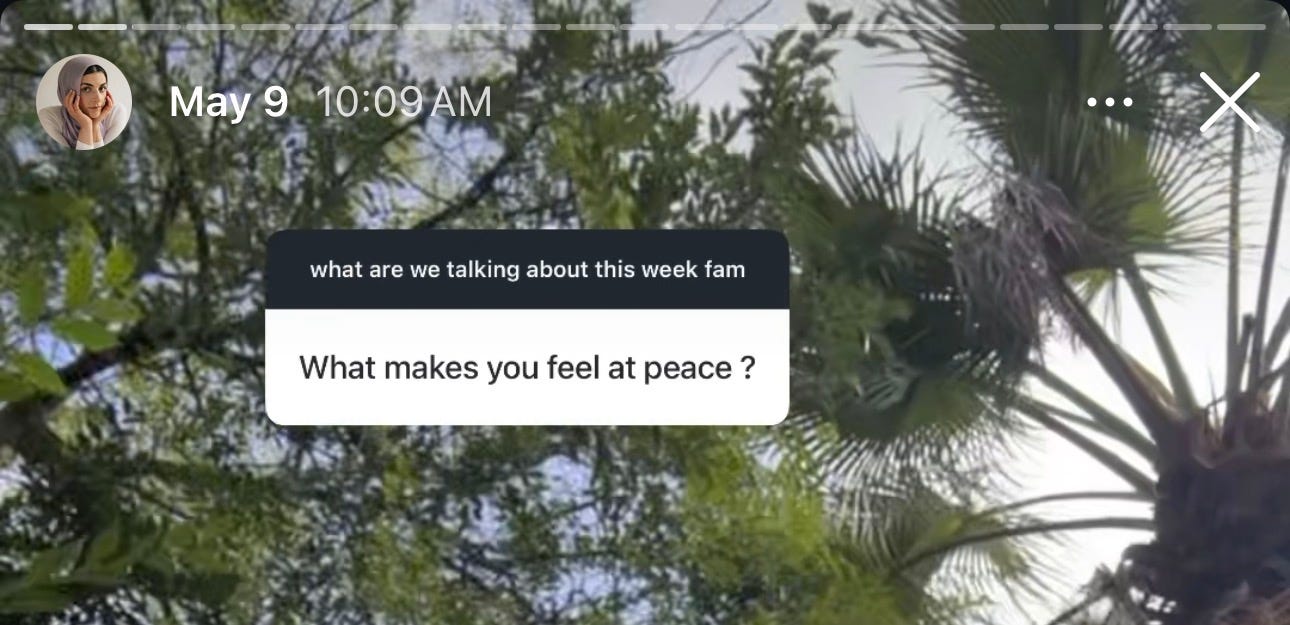
I was thinking about that experience this weekend, when someone had asked on my Instagram weekly AMA. “What makes you feel at peace?”
The question stuck with me as I went to my regular lifting class. And I pushed myself, as usual. I got high-fives from strangers, a regular occurrence as my pregnancy has made me unavoidable amidst the chiseled bodies of Los Angeles’ finest influencers, et al. As I finished my workout, I remembered something my physical therapist had told me 9 months ago — she’s an endurance athlete who trains athletes. I was recently pregnant and asked “have you trained any other pregnant return-to-sport patients mid-ACL recovery?” I was unwilling to slow down my ACL recovery — or worse, bring it to a grinding halt, and never return to the pitch again.
“Layla,” she laughed, “no. And I’ll bet most other PTs haven’t either.”
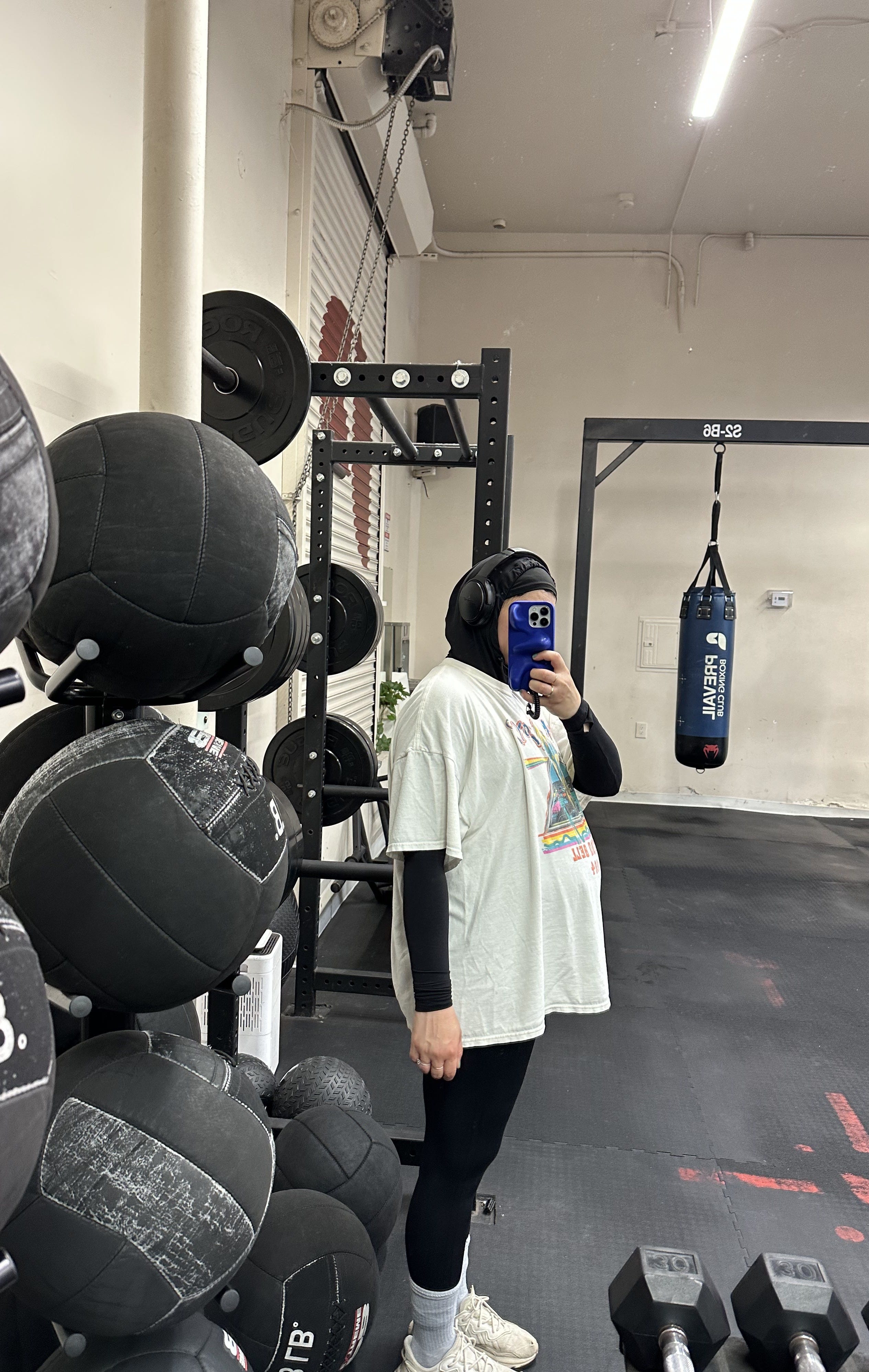
So, on Saturday, I asked my lifting coach the same question, “How many other 8-month-pregnant women have you trained?” Sean also laughed, “none, Layla. None.”
Which kinda surprised me. Because pregnancy is hard. And labor is the hardest thing I have ever done. When I think about working out, and gritting my teeth through the challenge, I see it as conditioning for labor. What will likely be the 4th hardest day of my life, considering that my other 3 births were (by far) the most physically challenging days of my life. Everything else pales in comparison.
If labor and delivery were a sport, it would be the most physically and mentally challenging. Tearing my ACL, cutting my leg open for operation, playing numerous sports for numerous leagues, jumping out of an airplane, speaking to an audience of thousands, sleeping in the Amazon (by a jaguar, no less), and anything I’ve ever done pales in comparison.
Rather than seeing my body as an obstacle, I see myself as superhuman right now. I recall the first words my sister said to me after delivering my first child, (voluntarily) unmedicated. “You feel unstoppable right now, don’t you? It feels like you can do anything!”
I laughed and said “yes…definitely, yes.”
I was recently reading the Upside of Stress. The author was talking about how the same event can trigger a challenge response or anxiety response. And I kept thinking — that’s exactly what was happening in that delivery room. And at the gym. And every hard thing in between.
I wasn’t managing pain as much as I was interpreting it.
Belief is a biological input.
When you frame hard things as challenges instead of threats, your body responds differently. Your cardiovascular system responds differently depending on how you interpret a stressor. When you appraise a challenge as something you have the resources to handle, your heart pumps more efficiently and your blood vessels dilate — a physiological profile associated with better performance. When you appraise the same thing as a threat, the opposite happens.1
Meaning your body is taking cues from your mind about whether the hard thing is survivable. Meaning believing that stress is harmful is what actually harms you.
Another landmark study followed 30,000 adults over eight years and found that high levels of stress alone didn’t increase your chance of dying — but high stress combined with the belief that stress is bad increased the risk of dying by 43%. People who reported high stress but didn’t view it as harmful had no elevated risk at all.2
But the challenge response only works if your nervous system has enough baseline regulation to access it.
When you’re chronically stressed, your prefrontal cortex — the part of your brain that does the reframing — goes offline. The amygdala takes over. And you can’t think your way out of a state your body is already locked into. Research on stress reappraisal shows the intervention works reliably for acute stress, but is way less effective for people carrying chronic stress or high baseline anxiety.3
Reframing requires capacity, chronic stress depletes capacity.
Do you believe that reframing stress as a challenge response helps you deal with things better?
There’s even a term for the cumulative physiological wear of long-term stress: allostatic load. The higher it is, the more your body’s baseline is already elevated — which means the gap between calm and activated and the gap where the challenge response lives — shrinks.4 You can’t access a tool your nervous system doesn’t have the reserve to use.
So before the challenge response, there’s a prerequisite. Sleep. Safe relationships. Reducing the mental loops that keep your stress response running long after the stressor is gone — what researchers call perseverative cognition.5 Polyvagal theory calls this ventral vagal activation — a state of safety that makes growth, connection, and higher-order thinking available.6
The challenge response is more of a tool than a mindset hack. And like any tool, it only works if the conditions are right. You can’t operate a lawnmower in a tornado.
DOING HARD THINGS GROWS YOUR BRAIN
Doing hard things — especially ones you don’t want to do — physically grows your brain.
When you push through something your body or mind is resisting, your anterior midcingulate cortex (aMCC) — the region of the brain most associated with willpower, persistence, and the will to keep going — activates. The more you challenge yourself, the greater your aMCC volume — the size of which is linked to longevity and motivation in older adults. The people who seem unstoppable aren’t made differently, they’ve been doing things they didn’t want to do for longer.7
I TRUST ME BECAUSE I TRY HARD THINGS
I was listening to a neurosurgeon who said aspiring neurosurgeons always ask him how to get a headstart on being good at neurosurgery. “You can’t be good at neurosurgery in pre-med. Not in med school. You only become good at neurosurgery in neurosurgery residency. And the only way you can prep in advance is by being good at learning,” he said (disclaimer: this was from a TikTok but I can’t find it for the life of me, comment the link if you find it).
Science proves what he’s saying — mastery experiences (not pep talks) are the strongest predictor of self-efficacy. Albert Bandura spent decades studying what actually builds belief in yourself. His conclusion: mastery experiences are the number one source of self-efficacy — stronger than watching others succeed, stronger than being told you can do it. When you do a hard thing and survive it, your brain files that as evidence. Accumulated evidence becomes the foundation of self-trust.8
This is why doing is the most effective mechanism for being.
I TRUST ME BECAUSE I DO HARD THINGS
Your behaviors don’t just reflect your identity — they create it.
Once you believe abilities are developed through effort, you show fundamentally different behavioral responses to setbacks than those who see abilities as fixed.9 Adopting growth-oriented behaviors first shifts identity over time, not the reverse.10 You can’t think your way into believing you’re the kind of person who does hard things, you have to do hard things to know that you’re capable of whatever lies ahead.
THE ONLY WAY YOU LEARN IS THROUGH DOING THINGS
Because you can’t learn it in preparation. You can only learn it in the doing. Like the TikTok neurosurgeon said, research11 confirms that what separates novices from experts isn’t talent or prior knowledge — it’s accumulated deliberate practice in the actual domain.
Because I know I am willing to try, and I am ok with being wrong, and there’s a direct correlation between how many shots I shoot in life versus those I make, I am optimistic.
BUT OPTIMISM CAN’T COME AT THE EXPENSE OF OTHERS
So, I trust me.
But others have to trust me too. I am optimistic. Being optimistic is not the same as overpromising and underdelivering. Optimism cannot come at the expense of others. But I generally do believe I will be fine.
YOU CAN CHOOSE WHO YOU ARE
I read a Substack recently that talked about how neuroplasticity is value neutral.
Things are either negative, neutral, or additive. I have always looked at neuroplasticity through a lens of dismantling negative habits, like carrying a nasty temper. And I think about neuroplasticity with additive habits, like working out. But I seldom think about it through a neutral lens. What are the tiny day to day things we do that reinforce who we are?
The way you talk to yourself when a workout gets hard. Whether you finish the thing you said you’d finish. Whether you tell the truth when the lie is easier. Whether you show up when no one is watching.
Neuroplasticity doesn’t care about your intentions. It responds to your behavior. Every rep, every follow-through, every moment you choose discomfort over retreat is data your brain files away. Over time, it becomes the story your nervous system tells about who you are.
Which means the question isn’t who you want to be. It’s what you’re doing today that proves it. Even in the mundane. Especially in the mundane.
So back to being at peace.
WHAT MAKES ME FEEL AT PEACE?
I am at peace because I trust myself. Not because everything has gone my way. Not because I’ve avoided hard things. Because I’ve done hard things. I do hard things. Over and over, in rooms where nobody was watching, with no guarantee it would work out.
I trust myself. I trust myself to get through the good. The bad. The ugly. The fantastic. I trust myself to do the right thing when I screw up, and I do screw up. My self-trust is not based on an image (or lived experience) of perfection. It’s based on an image of agency and accountability and proactivity.
And I don’t trust myself because I mentally exhaust every option, often something that anxious people do when they worry about bad outcomes.12 I don’t over-solve in advance or run every scenario in my head, leading to serious mental fatigue. I exist, and solve when it happens.
That nurse was right. The baby was coming whether I liked it or not. Labor doesn’t negotiate just like most of life doesn’t negotiate.
What matters is the evidence you’ve been stacking, quietly, that you can handle what’s coming. I’ve been stacking it for a long time. That’s what peace feels like.
Helllooo and thanks for reading til the end! Leave me a comment, love hearing from y’all. The feedback also helps me shape my own ideas.
This post was not technically sponsored by Spencer’s West Hollywood, but they gifted me an amazing pre-natal massage where I did a lot of thinking for this article, so they certainly enabled it. 15/10 rec for my Los Angeles/NYC readers. The LA location is in this stunning mid-century, Spanish style home.


Blascovich, J., & Tomaka, J. (1996). The biopsychosocial model of arousal regulation. Advances in Experimental Social Psychology, 28, 1–51.
Keller, A., Litzelman, K., Wisk, L.E., Maddox, T., Cheng, E.R., Creswell, P.D., & Witt, W.P. (2012). Does the perception that stress affects health matter? Health Psychology, 31(5), 677–684.
Jamieson, J.P., Mendes, W.B., & Nock, M.K. (2013). Improving acute stress responses: The power of reappraisal. Current Directions in Psychological Science, 22(1), 51–56.
McEwen, B.S. (1998). Stress, adaptation, and disease: Allostasis and allostatic load. Annals of the New York Academy of Sciences, 840, 33–44.
Brosschot, J.F., Gerin, W., & Thayer, J.F. (2006). The perseverative cognition hypothesis: A review of worry, prolonged stress-related physiological activation, and health. Journal of Psychosomatic Research, 60(2), 113–124.
Porges, S.W. (2011). The Polyvagal Theory: Neurophysiological Foundations of Emotions, Attachment, Communication, and Self-Regulation. W.W. Norton & Company.
Touroutoglou, A., Andreano, J., Dickerson, B.C., & Barrett, L.F. (2020). The tenacious brain: How the anterior mid-cingulate contributes to achieving goals. Cortex, 123, 12–29.
Bandura, A. (1977). Self-efficacy: Toward a unifying theory of behavioral change. Psychological Review, 84(2), 191–215.
Carol Dweck, our growth versus fixed mindset queen
Blackwell, L.S., Trzesniewski, K.H., & Dweck, C.S. (2007). Implicit theories of intelligence predict achievement across an adolescent transition. Child Development, 78(1), 246–263.
Ericsson, K.A., Krampe, R.T., & Tesch-Römer, C. (1993). The role of deliberate practice in the acquisition of expert performance. Psychological Review, 100(3), 363–406.
Dugas, M.J., Gagnon, F., Ladouceur, R., & Freeston, M.H. (1998). Generalized anxiety disorder: A preliminary test of a conceptual model. Behaviour Research and Therapy, 36(2), 215–226.
Such an insightful piece. Very profound and timely.
another excellent article layla- I've gone through years of PTSD recovery, and was fortunate to have access to some of the best practitioners to guide me through that. There's a point in recovery where you have to start intentionally "re-activating" your nervous system to re-expose yourself to stress for the sake of building new neural pathways and intentionally rebuilding life on your own terms. it can be terrifying and part of my journey has been reframing and reminding myself that it's safe, that it's good for me, that i can trust myself, and that i've put in the work to be resourced enough to handle it (also why i follow your content and that of others discussing similar themes to continue reinforcing that message to myself)