

12 lessons that changed the way I think
It's my birthday, here is everything I learned in the last year

It’s my birthday! Last year, I summarized everything I’d learned to celebrate another year at life. And you guys loved it. So here is everything that I’ve learned over the last twelve months. You’ll quickly find that these lessons support my fundamental belief that emotional regulation is a crucial driver for potential.
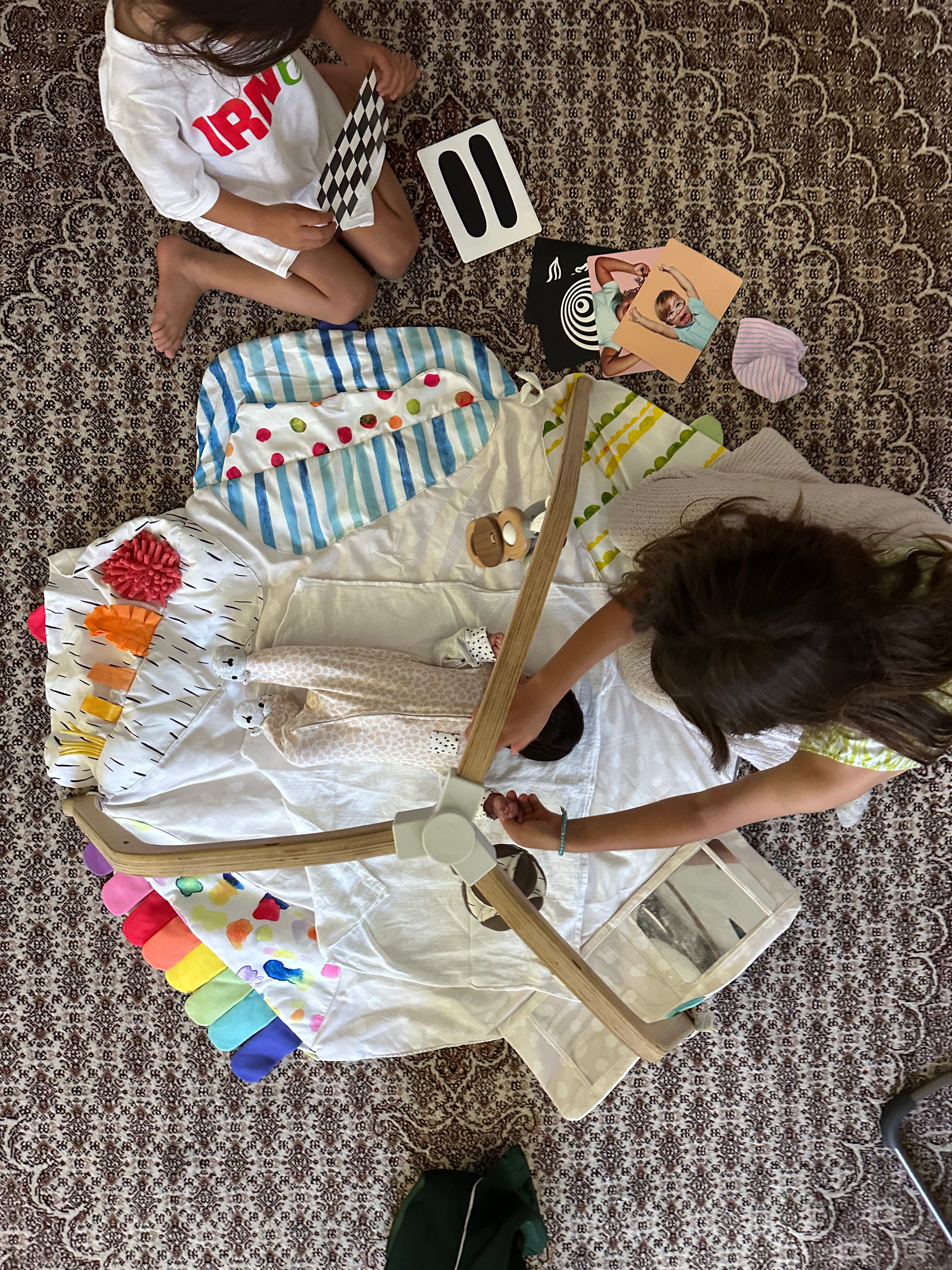
First off, thank you for the love over the last week! For those out of the loop, I just had a baby. Noora, our 4th, is perfect. I was actually drafting this article when my water broke.
THE BEST LESSONS OF 2026:
Belief is a biological input.
This one has been a big lesson, as my body went from being extremely athletic in 2024 to surviving an ACL tear in 2025 and my fourth pregnancy in 2026. What you believe about yourself changes how your body performs — how you process food, how you respond to exercise, how much effort your brain allocates to a task before it gives up. There’s research behind this. Harvard researchers studied hotel housekeepers in 2007: when told their daily work counted as exercise, their weight dropped, blood pressure lowered, body fat decreased — without changing anything they did. A different belief led to a different body.
Your beliefs are upstream of your physiology. Which means the work of changing your outcomes starts earlier than most people think. Research and more info below.

Success is cringey.
Ama Hill said “the cost of success is embarrassment.” And it’s true. Success is very cringey.
The cost of success is cringe. And the currency is persistence. TL;DR: if you get cringey and stay cringey, you can do almost anything.
Because your brain doesn’t care about your goals — it cares about your survival. And the life you say you want registers as a threat if it’s outside of your comfort zone. So you may be inclined to shrink your goals, instead of embrace the cringe.

Self-sabotage is usually self-protection.
We all know someone mean. Someone who deflects criticism through insults, anger, or rage. Often, their fits come at the cost of their success.
Why? Because when you’re chronically dysregulated — stressed, reactive, constantly in low-grade survival mode — you cannot access your full cognitive bandwidth. You will never access your brain’s full potential while emotionally flooded.
Many people lack a well-regulated brain. And without a well-regulated brain, you will not have an extraordinary life. Being overwhelmed, mean, chronically overthinking, and emotionally volatile are costing you more than you realize.
Because those feelings get in the way of goals — and your brain doesn’t care about your goals. It cares about your survival.
The life you say you want — the promotion, the business, the version of yourself that posts publicly and charges more and leads boldly — registers in your nervous system as a threat.

What do you think so far? Should I keep these up?
Clarity is a prerequisite for efficiency. But getting clear is not efficient.
We are in a clarity epidemic right now. Everyone is promising you that the right tool, the right framework, the right AI prompt will make everything obvious. Or better — do the work for you. If you’ve been here long enough, you know I am not an anti-AI Substacker. But I am clear-eyed.
Clarity has been commodified. But clarity is inefficient to acquire and certainly cannot be bought.
If you don’t know what you want or where you’re going, AI will not save you. You cannot optimize your way to a vision. You have to sit in the discomfort of not knowing, and let the answer emerge. That process is slow and uncomfortable and completely necessary.

You can’t get out of your rut because you lack a goal, a path. Or you can’t control your mood.
If you are in a rut, you lack a vision, a path, or you are emotionally dysregulated. The first two are obvious to diagnose. The third, not as much. You will reach for apps to escape discomfort, scrolling endlessly to keep your mind distracted from anything meaningful or challenging. Or, you will prepare and over-think to achieve comfort. But the cure for feeling unprepared is not more preparation. It’s taking action regardless of how you feel.

Efficiency is the enemy of trust.
We are squeezing efficiency out of every corner of work. Cameras off, async everything, no small talk, fewer meetings. And then we wonder why teams feel disconnected.
Trust requires two things: someone has to believe you’re competent, and someone has to believe you have integrity. Both of those things take time, repetition, and actual human interaction to build. You cannot shortcut them. In a remote world, you have to be intentional about slowing down — or you will work with people for years and never actually trust each other.
Join 135,000 people for lessons like this in your inbox regularly
Your curiosity is for sale. You have to protect it.
Every social media company on earth is competing for the exact same cognitive resource your brain needs to learn something, get good at it, and want more.
When you do hard things, you grow your brain’s capacity. When you stay comfortable, that capacity shrinks. When your default state is passive consumption, your brain becomes a knife you haven’t sharpened in months.
The companies profiting from your attention know this.

Most of your life will suck.
Roughly a third of life will be good, a third will be hard, and a third will be boring.
To get through the boring, you need focus. To get through the hard, you need the ability to sit with bad feelings and stay functional anyway. This applies to work. To relationships. To any long-term commitment you’ve ever made. The good moments are not the majority — they are one part of the formula.
Align your expectations with that reality, and you’ll stop being blindsided every time things get hard. You’ll also stop abandoning things right before they turn.

Abundance is a discipline, not a desire.
This post about a TikTok poem may be my most viral. Abundance is almost always framed as a destination — but abundance is the result of discipline, not luck. Even when we have abundance, we are wired to forget and want more. A study of lottery winners found that they return to their emotional baseline after winning life-changing money, for example.
Abundance isn’t about wanting more; it’s about handling what you have with a still hand. The people I know with the most abundant lives take on the most and share the most. They build a reputation for high capacity, and the world keeps recognizing it. They also say no constantly — because every yes to more is a no to something else. AI is the perfect test case: use it with discipline and it multiplies you. Use it without focus, and you’re running with a full cup.

Anger is killing your dreams.
Years ago, I was on a call with a reporter and my co-founder. She asked me a question, and I looked at him, signaling for him to respond with a nod. He started to reply and she said “I asked Layla. Do you always mansplain?”
My eyes widened in horror. My co-founder is extremely respectful, calm even under the wildest circumstances, and predictable. He is not one to speak over anybody or strong-arm his way into a point.
“But..I wanted him to.” She talked over me to finish the article and continue her storyline. She was writing a big piece. While I still look back at that moment and cringe from the disrespect, from her falling into orientalist tropes suggesting I lack agency – and from assigning aggressive behavior to one of the few Black CEOs and founders. I now see the moment clearly: He could have reacted. But he didn’t. Because he never loses emotional control. And that’s what makes him great at his job. In fact, most successful founders I come across are emotionally regulated.
Your anger is costing a lot of people a lot of time. Including you — the cost is probably biggest to yourself.
And emotional regulation has a high ROI on your time. When you can manage your emotions, you can use your time wisely.

Send that last one to whoever needed to hear it
Ambition is expensive.
Ambition is also metabolically expensive. And it competes for the same fuel as anger. At a parenting workshop, the facilitator asked us to write what we were called as children, then name the voice. Then he ended with: “That voice is highly likely the voice in your kids’ heads right now.”
The best part is that I was in the workshop with my mom and sister. When we compared notes, the voice in our head repeated the same positive affirmations. About our excellence, kindness, generosity, curiosity, etc.
The most potent form of generational wealth is emotional regulation.
Ambition is a slow drip when you’re regulated. When you’re not, it goes dormant — because chronic dysregulation hijacks the prefrontal cortex, the same part of your brain responsible for planning and building. TL;DR: anger and ambition run on the same battery. Every time you regulate instead of react, you free up energy for something worth building.

There is an advantage to being unqualified.
“All progress is made by unqualified people,” Jim McKelvey correctly stated. The Wright Brothers were bicycle mechanics. Steve Jobs was a college dropout. The unqualified have an advantage: they don’t know what’s supposed to be impossible. When you do hard things, your anterior midcingulate cortex grows — the region linked to motivation, will to live, and resilience. Neuroscience proves the unqualified person willing to struggle has a structural advantage over the qualified person avoiding discomfort. The credential trap tells you to prepare more, study more, wait until you’re ready. That’s a strategy for staying exactly where you are. Progress doesn’t require permission. It requires tolerance for being unqualified for being capable and disciplined enough to do the reps anyway.

Thanks for following along this year, and I hope you all have learned as much as I have by documenting and connecting the various thoughts required to write each Substack.
Thanks for reading! What did you think? One cool thing about writing regularly is that many of these ideas developed throughout the year. They started somewhere, and have since evolved into foundational beliefs that drive me. Anyways, leave a comment and tell me which hit home most.

So many gems as always!
Mabrook mabrook on your fourth addition. May the Almighty make her/him (I don’t remember) the coolness of your eyes. Ameen